Proteus: a Plan for an Undersea Research Station
NFK Editors - August 11, 2020Curaçao —(Map)
Fabien Cousteau, a well-known ocean explorer, has announced plans to build a large research station under the ocean. The goal of the project is to become an “underwater version of the International Space Station” (ISS).
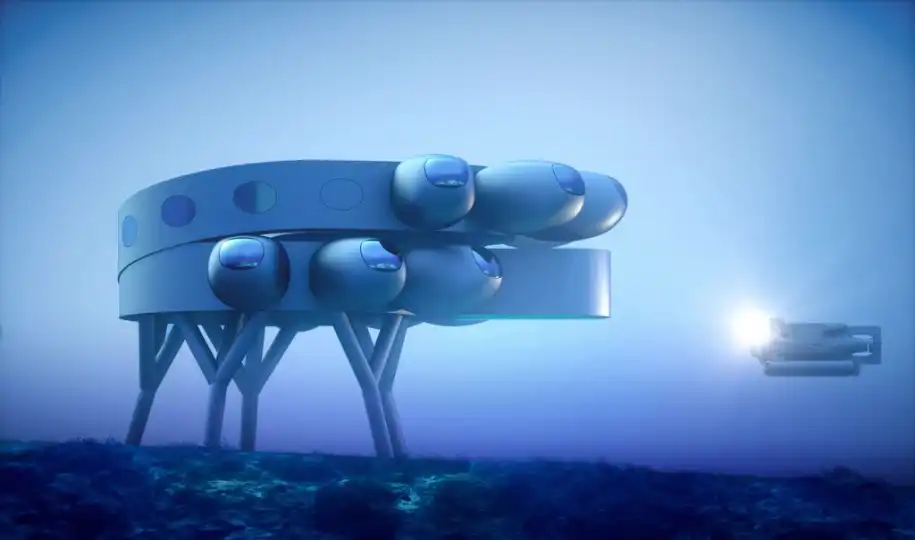
Fabien Cousteau, a well-known ocean explorer, has announced plans to build a large research station under the ocean. The design is shown above. The goal of the project is to become an “underwater version of the International Space Station”.
(Source: Fabien Cousteau’s PROTEUS™. Concept designs by Yves Béhar & fuseproject.)
Mr. Cousteau is the grandson of Jacques Cousteau, an ocean scientist who brought the wonders of the sea to the attention of people around the world. Jacques Cousteau helped invent the Aqua-Lung, an early version of the scuba breathing gear now used by divers everywhere.
Fabien Cousteau has followed a similar path, exploring the sea as a scientist and working to protect the oceans.
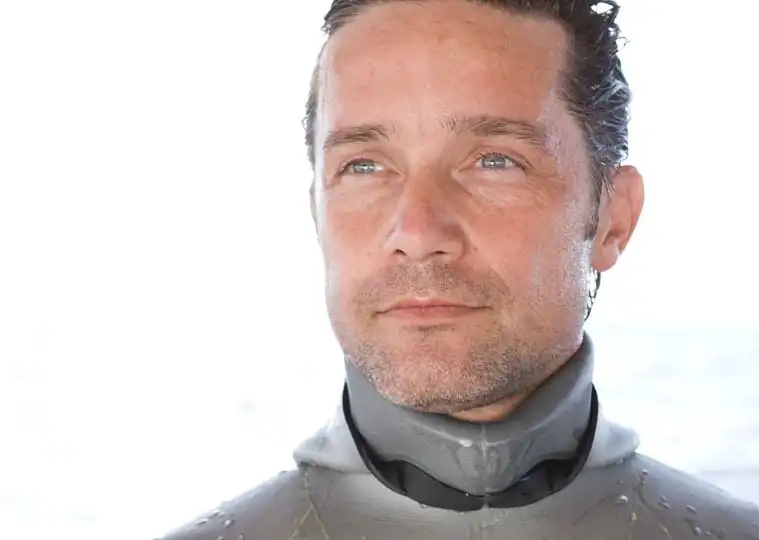
Fabien Cousteau (above) is the grandson of Jacques Cousteau, an ocean scientist who brought the wonders of the sea to the attention of people around the world. Fabien Cousteau has continued his grandfather’s work of promoting and protecting the oceans.
(Source: FCousteauFan [CC BY-SA], via Wikimedia Commons.)
Though oceans cover more than 70% of our planet, they still aren’t well explored. NOAA (National Oceanic and Atmospheric Administration) says we have created maps of less than 20% of the world’s oceans, and only 5% have been explored.
Space seems to have gotten much more attention, even though it’s farther away. The ISS has been around for more than 20 years, and more people have gone to the moon than have gone to the deepest point in the ocean.
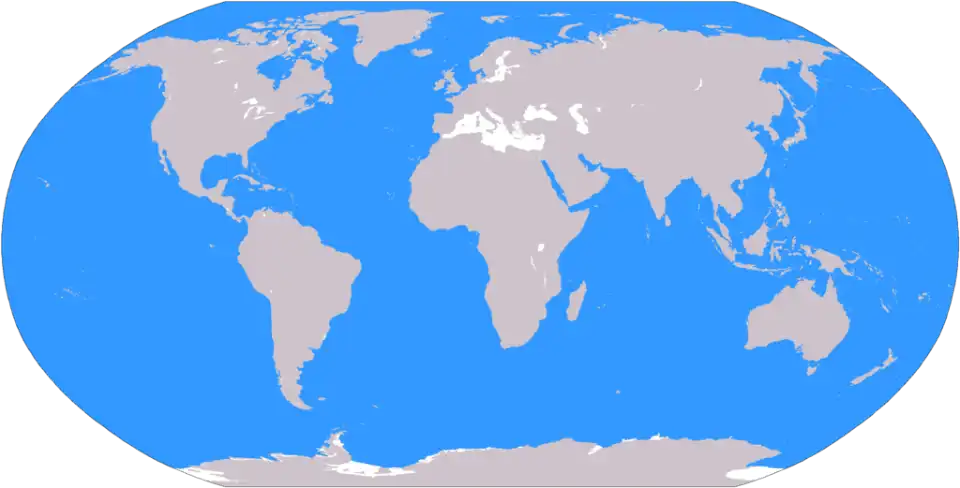
Though oceans cover more than 70% of our planet, they still aren’t well explored. NOAA says we have created maps of less than 20% of the world’s oceans, and only 5% have been explored.
(Source: WikimediaCommons.org.)
Mr. Cousteau believes exploring the ocean is far more important than exploring space. “It’s our life support system. It is the very reason why we exist in the first place,” he says.
But though the ocean is all around us, studying it is a challenge. Divers are limited in how far down they can go and how long they can stay below. Returning to the surface can be dangerous. After a deep dive, divers must wait for hours before they dive again. All of this means that undersea experiments are very limited.
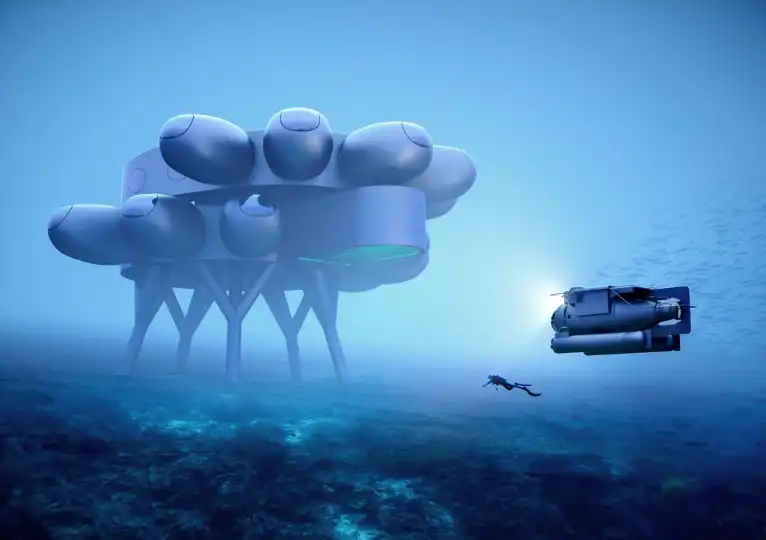
The new undersea laboratory is designed to solve many of the problems involved in doing ocean research from the surface. Named “Proteus”, the lab is a 4000-square-foot (370-square-meter) structure that can be a home for up to 12 people at a time.
(Source: Fabien Cousteau’s PROTEUS™. Concept designs by Yves Béhar & fuseproject.)
The new undersea laboratory is designed to solve many of those problems. Named “Proteus”, the lab is a 4000-square-foot (370-square-meter) structure that can be a home for up to 12 people at a time.
By actually living beneath the sea, scientists will be able to dive and work for much longer without worrying about the dangers of coming to the surface.
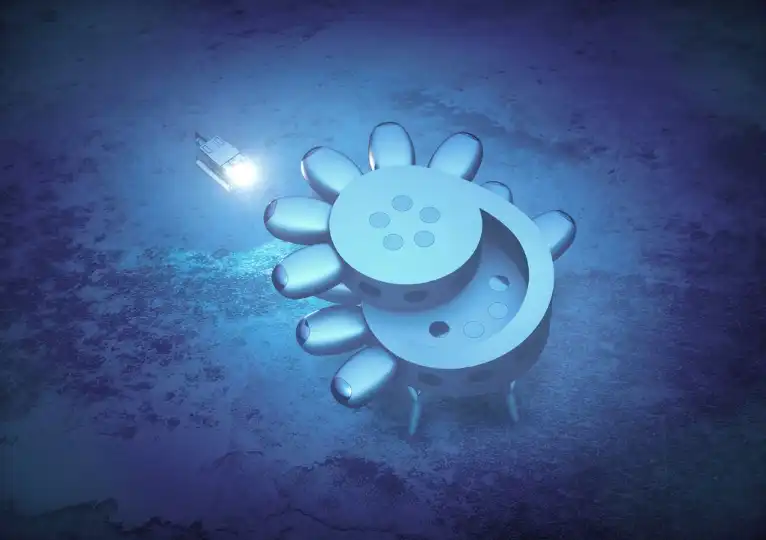
Mr. Cousteau says that the research base won’t just be used to study and help protect the sea, but also to research new ways of creating energy, growing food, and perhaps even searching for new medicines.(Source: Fabien Cousteau’s PROTEUS™. Concept designs by Yves Béhar & fuseproject.)
Mr. Cousteau says that the research base won’t just be used to study and help protect the sea, but also to research new ways of creating energy, growing food, and perhaps even searching for new medicines.
The power for the station is expected to come from solar energy and the movement of the ocean. Proteus is also expected to have the first underwater greenhouse in the world, so that the lab will be able to grow some of its own food.
Like the ISS, Proteus is designed so that it can grow in the future, as scientists decide to add new sections or equipment to the station.
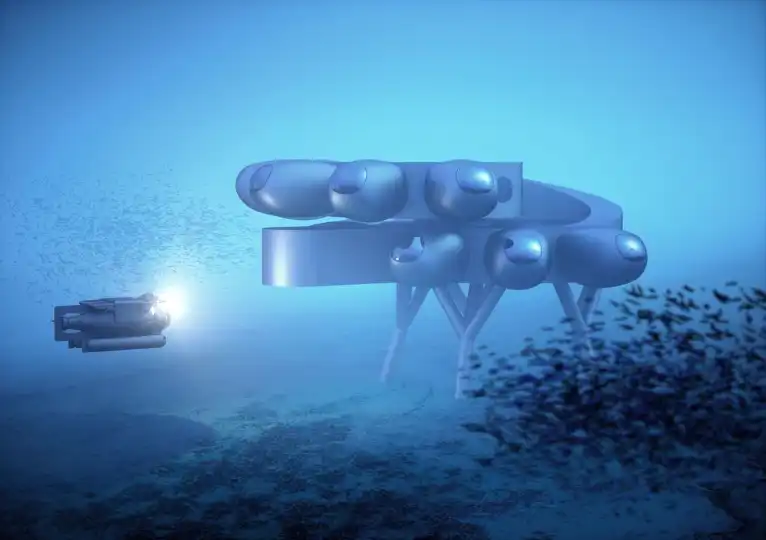
Like the ISS, Proteus is designed so that it can grow in the future, as scientists decide to add new sections or equipment to the station.
(Source: Fabien Cousteau’s PROTEUS™. Concept designs by Yves Béhar & fuseproject.)
Proteus was designed by Yves Behar, a well-known designer. Together Mr. Cousteau and Mr. Behar are working to raise money to build Proteus. They say it will cost about $135 million.
Plans call for Proteus to be built on the sea floor 60 feet (18 meters) below the ocean’s surface off the island of Curaçao in the Caribbean ocean. Mr. Cousteau hopes to have the lab completed and ready to use by 2023.
Did You Know…?Proteus isn’t the first underwater laboratory. Since 1986, there has been a small laboratory called Aquarius off the coast of Florida. Mr. Cousteau set a record for living underwater when he worked in Aquarius for 31 days in 2014. The Proteus lab will be 10 times as large as Aquarius.
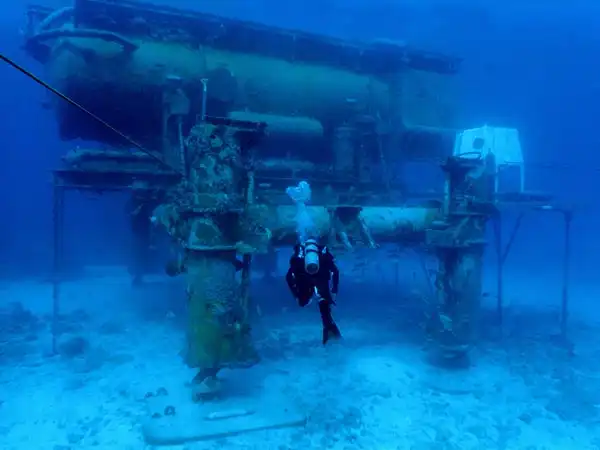
Since 1986, there has been a small laboratory called Aquarius (above) off the coast of Florida. Mr. Cousteau set a record for living underwater when he worked in Aquarius for 31 days in 2014. The Proteus will be 10 times as large as Aquarius.
(Source: NOAA [Public domain], via Wikimedia Commons .)
Check Yourself
0/4
1. Doing ocean research from the surface is a challenge because diving time is so limited.
True False2. How much of the world's oceans have been explored?
20%80%50%5%3. Proteus will have the world's first underwater _______________ and help explore new ways of growing food.
4. How much is Proteus expected to cost?
$35 million$150 million$135 million$1.35 millionDo you agree with Mr. Cousteau that it's important to explore the sea? Why do you think exploring space has gotten so much more interest?
ResetSourceswww.cnn.com
www.fastcompany.com
www.cnet.com
newatlas.com
www.forbes.com
en.wikipedia.org
Curaçao
View Larger MapShare:
A group called Oceanix has come up with a plan to create the world’s first floating city. In early April their plan was discussed at the United Nations.
You might be interested in…
Are Orcas and Dolphins Working Together?
NFK Editors - Dec 17, 2025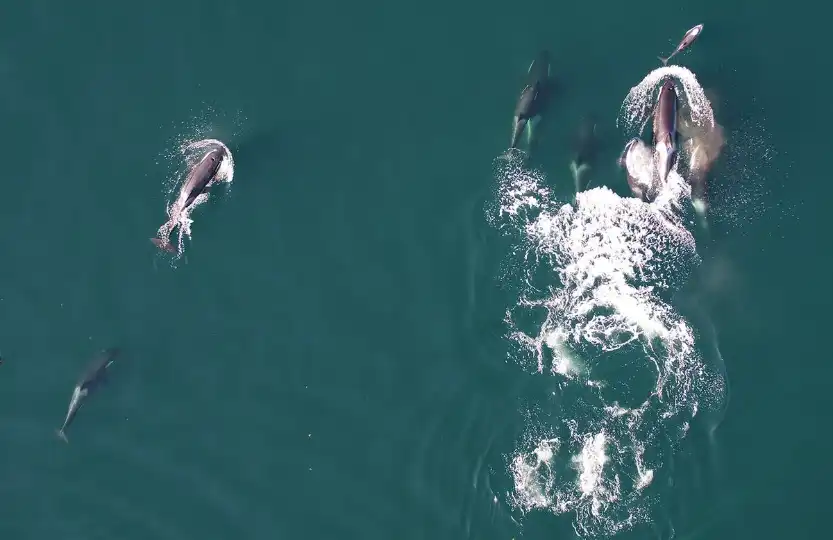
Scientists have discovered that two different kinds of sea animals – orcas and dolphins – may be working together to hunt for salmon. Orcas and dolphins are both clever, but it’s unusual for two different kinds of animals to cooperate in this way.
Scientists Discover “Death-Ball” Sponge & Other New Species
NFK Editors - Nov 19, 2025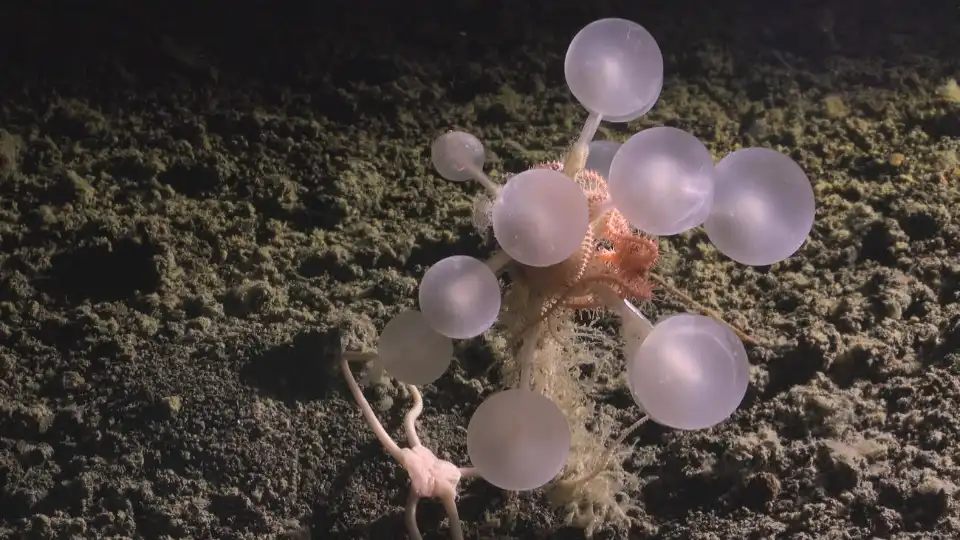
By exploring deep under the Southern Ocean, researchers have discovered 30 unusual species that are new to science. The species include a sponge that eats animals, worms that eat bones, and several news sea stars and sea worms.
Pig Kidney Transplant Trial Begins in US
NFK Editors - Nov 12, 2025
Doctors at a hospital in New York have begun a program that will test whether specially designed pig kidneys can be used to replace human kidneys. The results of the trial program could help thousands of people who are waiting for a new kidney.
Scientists Spot Unusual Hybrid “Grue Jay” in Texas
NFK Editors - Sep 25, 2025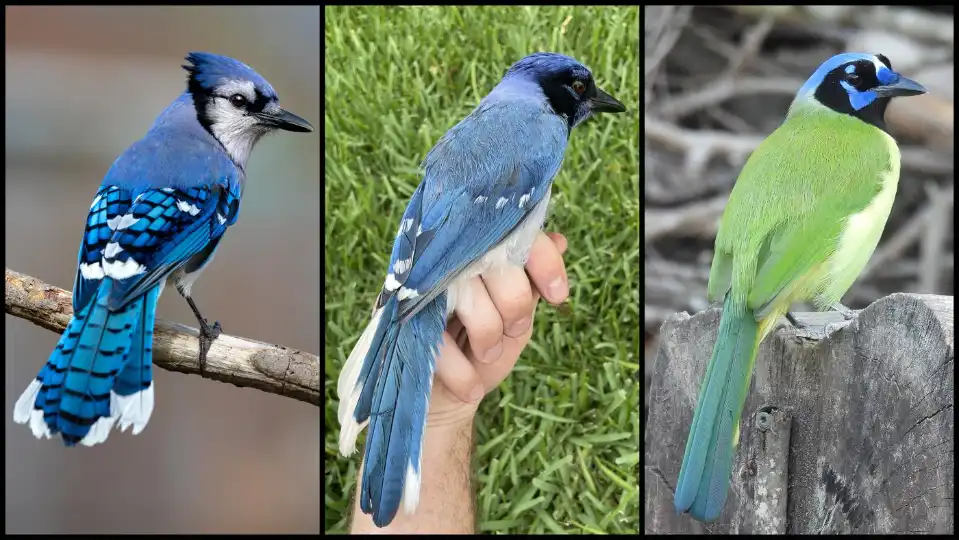
Scientists have reported on an unusual “hybrid” bird spotted in Texas – a cross between a blue jay and a green jay. The discovery is surprising because the two species are quite different. Scientists think the hybrid could be a result of climate change.




Comments